skip to main |
skip to sidebar
 The U.S. administration and the current Afghan government are facing some of the same problems as the Soviet Union did in the 1980's. Today, Afghanistan is faced with many difficulties including corruption, lack of an economic development strategy and a proper educational system, poverty, high unemployment, and low literacy rates. Even geography is not in the favor of the Afghan people--Afghanistan does not have any major resources, such as oil or minerals, and its cities and villages are immensely divided from one another by the mountainous regions of the country. Due to a great abundance of issues, the U.S. administration and the current Afghan government, being pressured by the Afghan people and the international community, have to embark upon all the challenges at the same time.
So, the answer to how successful will the United Sates be is still unclear. To withdraw, we are told, would result in chaos--perhaps an Afghan civil war. Today, July 25, 2009, Malalai Joya, however, brought up another interesting perspective. In an article published in The Guardian, she suggest that a civil war is inevitable; furthermore, she suggests that the longer the foreign troops stay in Afghanistan, the worse the civil war will be.
While I admire Joya's work in Afghanistan, I have a hard time convincing myself that the withdrawal of foreign troops will not result in chaos. In other words, I feel that the withdrawal will have far greater consequence. That being said, I do believe that the way the situation is being handled could improve by taking a few extra steps. That is not to say that I claim to know the answers, but rather, the U.S. can work harder to find a better ways to fight the Taliban; more troops is certainly not the answer.
First, the United States needs to get all the experts on Afghanistan, including Russians who were involved in Afghanistan in 1980's, to ask for advice on how they can alter their rebuilding efforts. Most of the problems that we are facing are cultural and social--the United States' military is not well aware of most of the demands of Afghans. Though this has improved over the years, more could be done. Secondly, the Afghan government needs to play a greater role in the efforts of reconstruction; in other words, the United States has to start to back up as more and more Afghan officials are being trained. Perhaps, the U.S. is already taking such steps but the training is slow (due to lack of money), which leads me to my third point. Afghanistan needs more money.
It maybe hard to believe, but Iraq received twice as much money in foreign aid than Afghanistan did; even though, Iraq was able to produce more than 75% of their government spending through oil money. That number for Afghanistan, I believe, is less than 10%. When it comes to foreign aid, it is important to point out that Afghanistan is one of the worst countries in terms of the level of corruption. So, most of the money being invested may end up in the hands of corrupt warlords. Therefore, the efforts to fight corruption, though not simple, could improve a lot more. And then, there are other issues such as opium production, lack of education, poverty, and unemployment among numerous others.
Lastly, I understand that my argument is over simplifying these issues, which could not be even cover in a 100-page report; however, most would agree that the United States can improve its rebuilding efforts by taking a few simple steps. And as far as withdrawal goes, I don't think that's the answer either--the Afghan government does not poses any powers, and it will cause a chaos and may give rise to more militants entering the country from Pakistan.
Here is the Guardian article, "The big lie of Afghanistan" by Malalai Joya.
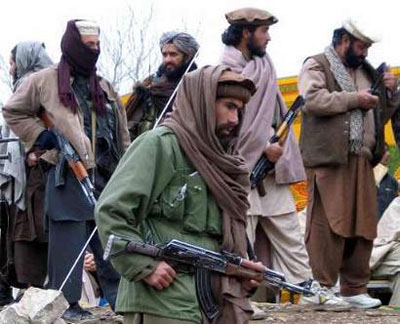 The U.S. administration and the current Afghan government are facing some of the same problems as the Soviet Union did in the 1980's. Today, Afghanistan is faced with many difficulties including corruption, lack of an economic development strategy and a proper educational system, poverty, high unemployment, and low literacy rates. Even geography is not in the favor of the Afghan people--Afghanistan does not have any major resources, such as oil or minerals, and its cities and villages are immensely divided from one another by the mountainous regions of the country. Due to a great abundance of issues, the U.S. administration and the current Afghan government, being pressured by the Afghan people and the international community, have to embark upon all the challenges at the same time.


 Posts
Posts


I thought you might be interested to read about this company, a unique effort to address the housing shortage in Afghanistan with the use of renewable energy technologies, check it out: http://www.ihfdllc.com/site/
ReplyDelete