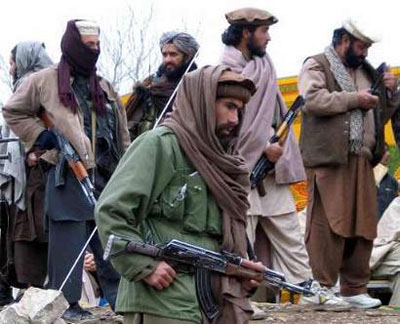
 The U.S. administration and the current Afghan government are facing some of the same problems as the Soviet Union did in the 1980's. Today, Afghanistan is faced with many difficulties including corruption, lack of an economic development strategy and a proper educational system, poverty, high unemployment, and low literacy rates. Even geography is not in the favor of the Afghan people--Afghanistan does not have any major resources, such as oil or minerals, and its cities and villages are immensely divided from one another by the mountainous regions of the country. Due to a great abundance of issues, the U.S. administration and the current Afghan government, being pressured by the Afghan people and the international community, have to embark upon all the challenges at the same time.
July 25, 2009
Another Afghan Civil War?
The U.S. administration and the current Afghan government are facing some of the same problems as the Soviet Union did in the 1980's. Today, Afghanistan is faced with many difficulties including corruption, lack of an economic development strategy and a proper educational system, poverty, high unemployment, and low literacy rates. Even geography is not in the favor of the Afghan people--Afghanistan does not have any major resources, such as oil or minerals, and its cities and villages are immensely divided from one another by the mountainous regions of the country. Due to a great abundance of issues, the U.S. administration and the current Afghan government, being pressured by the Afghan people and the international community, have to embark upon all the challenges at the same time.

July 18, 2009
My Forgotten Home
Living in the United States, or the Western World for that matter, we have forgotten millions of people around the world who live on less than a $1.00/day. In Afghanistan alone, there are millions of Afghans who do not have access to fresh water, food, shelter, clothing, and other basic needs. So, I just wanted to reflect on the "harsh" conditions under which many Afghans live, while we enjoy our everyday luxuries without even rethinking them. Just to clarify, I am not suggesting that we should, in anyway, feel guilty but rather, we should be thankful and not take for granted the things we have been blessed with. Here's a brief BBC report on a family in rural Afghanistan, not far from where I lived in mid-1990's:
July 11, 2009
Sayings of Prophet Muhammad
Hadiths, or sayings of Prophet Muhammad (S.A.W), play an important role in the lives of millions of Muslims around the world. Muslims believe that he was the best example for mankind, and we should follow his example in our everyday lives. Here is a video with some of his sayings:
Prophet Muhammad (SAW)
 Without a doubt, I think that Prophet Muhammad (peace be upon him) was the greatest man to ever live. The more I read about him, the more humbled and amazed I am by his actions, trustworthiness, truthfulness, patience, knowledge, and courage. For me, it is hard to imagine the existence of such an influential human figure. Today, his name is the most common name in the world, and he easily has over a billion followers. And Muslims allover the world take pride in Prophet Muhammad's (peace be upon him) character. One may say, however, that perhaps Muslims are biased about his "greatness," so I wanted to look at what some of the non-Muslim historians, writers, politicians, poets, and spiritual leaders have had to say about the prophet of Islam, Muhammad (peace be upon him). In this post, I will give a few examples in hopes of sparking your interest for further research about the prophet:
1. Michael Hart, in his book The 100: A Ranking of the Most Influential Persons in History, ranked prophet Muhammad (peace be upon him) as the number one, most influential, person:
"My choice of Muhammad to lead the list of the world's most influential persons may surprise some readers and may be questioned by others, but he was the only man in history who was supremely successful on both the religious and secular levels."
2. Lamartine, a French writer, politician, poet, and historian, writes the following of Muhammad:
"Philosopher, orator, apostle, legislator, warrior, conqueror of ideas, restorer of rational dogmas, the founder of twenty terrestrial empires and of one spiritual empire, that is Muhammad. As regards all standards by which human greatness may be measured, we may ask, is there any man greater than he?
If greatness of purpose, smallness of means, and outstanding results are the three criteria of human genius, who could dare to compare any great man in modern history with Muhammad? The most famous men created arms, and empires only. They founded, if any at all, no more than material power which often crumbled away before their eyes. This man merged not only armies, legislation, empires, peoples and dynasties but millions of men in one third of the inhabited world, and more than that, moved the altars, the gods, the religions, the ideas, the beliefs and the souls on the basis of a Book, every letter of which has become law. He created a spiritual nationality of every tongue and of every race.” (Historie de la Turqu,, Vol. 2, page 76-77)
"The more one reflects on the history of Muhammad and of early Islam, the more one is amazed at the vastness of his achievement. Circumstances presented him with an opportunity such as few men have had, but the man was fully matched with the hour. Had it not been for his gifts as a seer, statesman, and administrator and, behind these, his trust in God and firm belief that God had sent him, a notable chapter in the history of mankind would have remained unwritten. It is my hope that this study of his life may contribute to a fresh appraisal and appreciation of one of the greatest of the sons of Adam."
"In the year 565 Justinian died, master of a great empire. Five years later Muhammad was born into a poor family in a country three quarters desert, sparsely peopled by nomad tribes whose total wealth could hardly have furnished the sanctuary of St. Sophia. No one in those years would have dreamed that within a century these nomads would conquer half of Byzantine Asia, all Persia and Egypt, most of North Africa, and be on their way to Spain. The explosion of the Arabian peninsula into the conquest and conversion of half the Mediterranean world is the most extraordinary phenomenon in medieval history."
Also, he writes: "I have studied him - the wonderful man - and in my opinion far from being an anti-Christ he must be called the saviour of humanity."
6. Rev. R. Bosworth-Smith writes that Muhammad (SAW) was the:
"Head of the State as well as the Church, he was Caesar and Pope in one; but, he was Pope without the Pope's pretensions, and Caesar without the legions of Caesar, without a standing army, without a bodyguard, without a police force, without a fixed revenue. If ever a man had the right to say that he ruled by a right divine, it was Muhammad, for he had all the powers without their supports. He cared not for the dressings of power. The simplicity of his private life was in keeping with his public life."
These are some of the example of what some of the western scholars thought about prophet Muhammad, whose influences on history are too great to ignore. Gene Garthwaite, a historian, suggests that there are a many great 'men' who play a part in history, but there are few who change history, and Muhammad was one of them. We have a lot to learn from his character and the history of the time because essentially, "events that took place in seventh-century Arabia have much to teach us about the events of our time and their underlying significance--far more, in fact, than the facile sound bites of politicians" (Armstrong)."It is impossible for anyone who studies the life and character of the great prophet of Arabia, who knows how he taught and how he lived, to feel anything but reverence for that mighty Prophet, one of the great messengers of the Supreme. And although in what I put to you I shall say many things which may be familiar to many, yet I myself feel whenever I re-read them, a new way of admiration, a new of reverence for that mighty Arabian teacher."
July 10, 2009
("Where's my homeland?") وطنم کو؟
Here's a poem called "وطنم کو؟" ("Where's my homeland?"), which I really enjoyed. In the future, once my typing in Farsi improves, I will try to translate some of the poems I post. Here is the poem (click to zoom):

Finding Your Passion
Randy Pausch (1960-2008) was a computer science professor at Carnegie Mellon University. He is widely known for his "last lecture" speech and his book The Last Lecture. Two years after being diagnosed with pancreatic cancer, he died at the age of 47 in 2008, leaving behind many inspirational speeches. This is an example.
In this speech, he suggests that "it is not the things we do in life that we regret, on our deathbed, it is the things we do not." I have been trying to, and want to, take every opportunity be happy, make the most of life, and try new things everyday in hopes of someday finding my passion.
Here is the video:
In this speech, he suggests that "it is not the things we do in life that we regret, on our deathbed, it is the things we do not." I have been trying to, and want to, take every opportunity be happy, make the most of life, and try new things everyday in hopes of someday finding my passion.
Here is the video:
July 9, 2009
New President!
 On July 1, 2009, Jim Yong Kim (biography) became the 17th President of Dartmouth College, making him the first Asian-American president of an ivy-league institution. The Dartmouth community welcomed him with much excitement as he took a tour of the college meeting with faculty, staff, students and the greater Hanover community. At a personal level, I am really excited to have him serve as the President and I am looking forward to seeing which direction he will take the college.
Friendship

In the age of Facebook, it is hard to define what friend or friendship means. Having hundreds of "friends" on Facebook, some of whom I have never met or talked to, makes me question my sincerity towards my so-called "friends." As a student, when I see my friends around campus, I say "hi" and ask how they are doing without the expectation of getting a response. At times, I find myself, like many others, not being sincere--it is almost as if I am asking certain question just for the sake of it or for the sake of caring conversations. This is perhaps a major weakness in most of us. We have come to value, for the most part, our time and money over our precious friends. In the future, I hope to become more sincere and take the time to talk and converse with my friends from heart.
This entry was inspired by a poem called Friendship by Muhammad Ali, the greatest boxer and one of my all-time favorite heroes.
Friendship
But, its value is far greater than a mountain made of gold.
For gold is cold and lifeless, it can neither see nor hear.
In time of trouble its powerless to cheer.
Gold has no ears to listen, no heart to understand.
It cannot bring you comfort or reach out a helping hand.
So, when you ask God for a gift, be thankful if He sends,
not pearls, diamonds, or riches but, the love of real true friends.
Descartes
Recently in my philosophy class, Introduction to Classic Philosophy, we have been studying Descartes' Meditations, which I have found to be fascinating. So, I highly encourage anyone to read them. Since I have really enjoyed it, I am posting a passage from the First Meditation:
"I am like a prisoner who is enjoying an imaginary freedom while asleep; as he begins to suspect that he is asleep, he dreads being woken up, and goes along with the pleasant illusion as long as he can. In the same way, I happily slide back into my old opinions and dread being shaken out of them, for fear that my peaceful sleep may be followed by hard labour when I wake, and that I shall have to toil not in the light, but amid the inextricable darkness of the problems I have now raised" (Descartes, First Meditation, line 23).
Perhaps this passage on itself does not convey much, but I will refrain myself from further explanation--as my knowledge about Descartes is very limited and--in an attempt to encourage you to read the Meditations yourself.
"I am like a prisoner who is enjoying an imaginary freedom while asleep; as he begins to suspect that he is asleep, he dreads being woken up, and goes along with the pleasant illusion as long as he can. In the same way, I happily slide back into my old opinions and dread being shaken out of them, for fear that my peaceful sleep may be followed by hard labour when I wake, and that I shall have to toil not in the light, but amid the inextricable darkness of the problems I have now raised" (Descartes, First Meditation, line 23).
Perhaps this passage on itself does not convey much, but I will refrain myself from further explanation--as my knowledge about Descartes is very limited and--in an attempt to encourage you to read the Meditations yourself.
Subscribe to:
Posts (Atom)

 Posts
Posts


